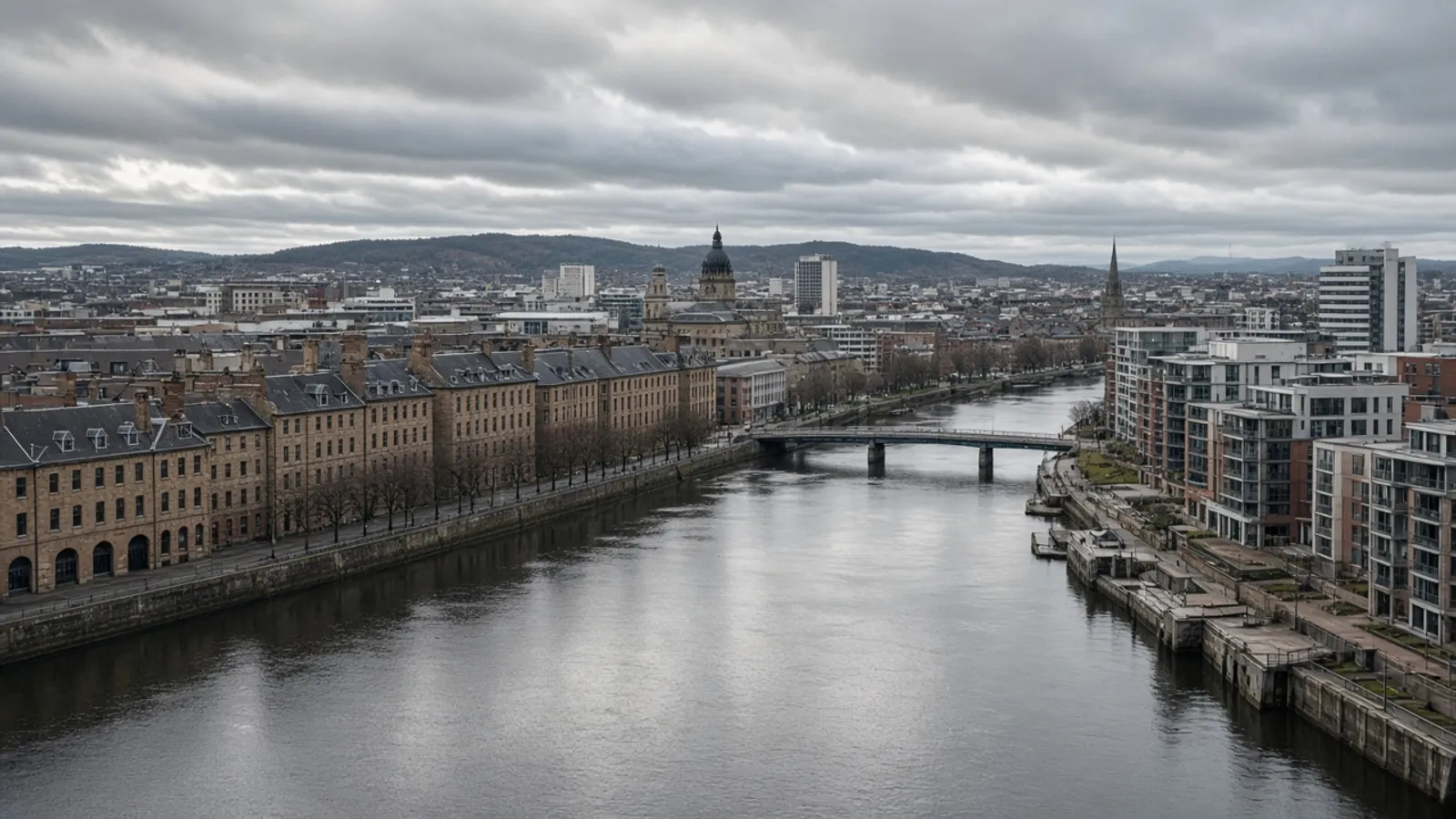
Glasgow is a river city with a hill habit. A topographical survey here has to cope with sandstone tenement backs, Clyde quay geometry and suburbs where the garden is a slope with a view. It also has to cope with a legal and planning culture that is not England with different rain.
Two official places we actually name
Glasgow City Council is the planning authority. Its local development plan, conservation areas and the simple practicality of a dense Victorian city are why we measure occupation and levels instead of tracing a deed plan and hoping. Merchant City yards and west-end villas fail in different ways; both fail if the drawing is thin.
For the waterfront as a civic project, Clyde Gateway is a named regeneration body working land in the east of the city region. We are not their surveyor of record and we do not claim their projects. We name them because “Clyde corridor” is not a mood board — it is a set of official places, quay walls and plots that have been in public conversation for years.
Scottish title is not a footnote
Registers of Scotland, not HM Land Registry, is the usual registration body. If you ask for a title-style plan we will translate the brief into the Scottish product you actually need, or we will say we need your solicitor in the room. A boundary survey still measures occupation; it will not pretend an English general boundary lecture answers a Scottish neighbour letter.
Kit on a gorge and a grid
GNSS works on open quays and dies between tenements. Total stations carry control through closes and back courts. A drone can describe a long Clyde shelf or a hillside field; it is a poor choice for a one-metre pend. Measured building surveys of sandstone stairs need patience and a method that does not block a close all morning.
National mapping still matters. We deliver on the grid Ordnance Survey documents for Great Britain so a civil engineer in the city can overlay the file. Planning applications in Scotland do not all travel through the English Planning Portal; we will not write your submission path for you, but we will give you a drawing that survives a site visit.
What to send
Closes, quays and the weather
A close is a corridor, a legal edge and a place people still dry washing. We will not block it all morning. We will measure stairs and backs with a method that lets residents pass. Quay walls need the occupier’s word before a tripod goes down. West-of-Scotland weather cancels more drone windows than any English brochure admits; build that into the programme.
Hillside suburbs steal time because every garden is a different fall. Specify whether you need a terrain model or a planning base. They are not the same density of spots. Tenement conversions need fabric and land together if a new door will meet a back court that has been raised over decades of bin stores.
Do not import an English pack
Validation lists, title language and the simple habit of how a neighbour letter is written are not a find-and-replace on a London template. If your solicitor is using English title-plan vocabulary on a Scottish brief, we will say so rather than draw a sheet that makes the letter worse.
Postcode, whether the site is a quay, a close or a hillside, and any deed plans you already hold. If you also work in Leeds or Cardiff, say so — portfolios that cross legal systems need that said early. Useful reading: GNSS and optical control and preparing the visit.
Related products on the Clyde and in the city
Quay and hillside work is a topo with a careful access sentence. Tenement and mill conversions add a building survey. Title work must be briefed as Scottish work, not as a find-and-replace on an English Land Registry paragraph. Drones need a weather window and a lawful take-off, not a hope.
We deliver on the Great Britain grid Ordnance Survey publishes so a local engineer can overlay the file. We do not write your planning path. We do write a drawing that survives a walk up the close.
If your solicitor is already using English general-boundary language, put them in the first email. It is cheaper than redrawing a sheet that made a neighbour letter worse.
A Glasgow briefing we can actually price
Say quay, close or hillside. Say whether the title conversation is already using English words it should not. Name Glasgow City Council as the planning authority and, if the waterfront is the point, the official Clyde Gateway geography — as a place type, not as a claimed job.
Registers of Scotland is not a footnote. Weather is not a footnote. A close that people still live in is not a private studio. Send the postcode, the deed plans you hold, and whether anyone will need to pass us on the stair. We will write a Scottish brief, not a cloned London one.
Questions we hear first
Is Land Registry the right body in Glasgow?
Most Scottish land registration sits with Registers of Scotland, not HM Land Registry. We will not paste English title-plan habits onto a Scottish brief.
Can you work on the Clyde quay walls?
We can measure land and structures we can safely occupy. Restricted quay operations need the occupier’s permission and a method that does not invent access.